
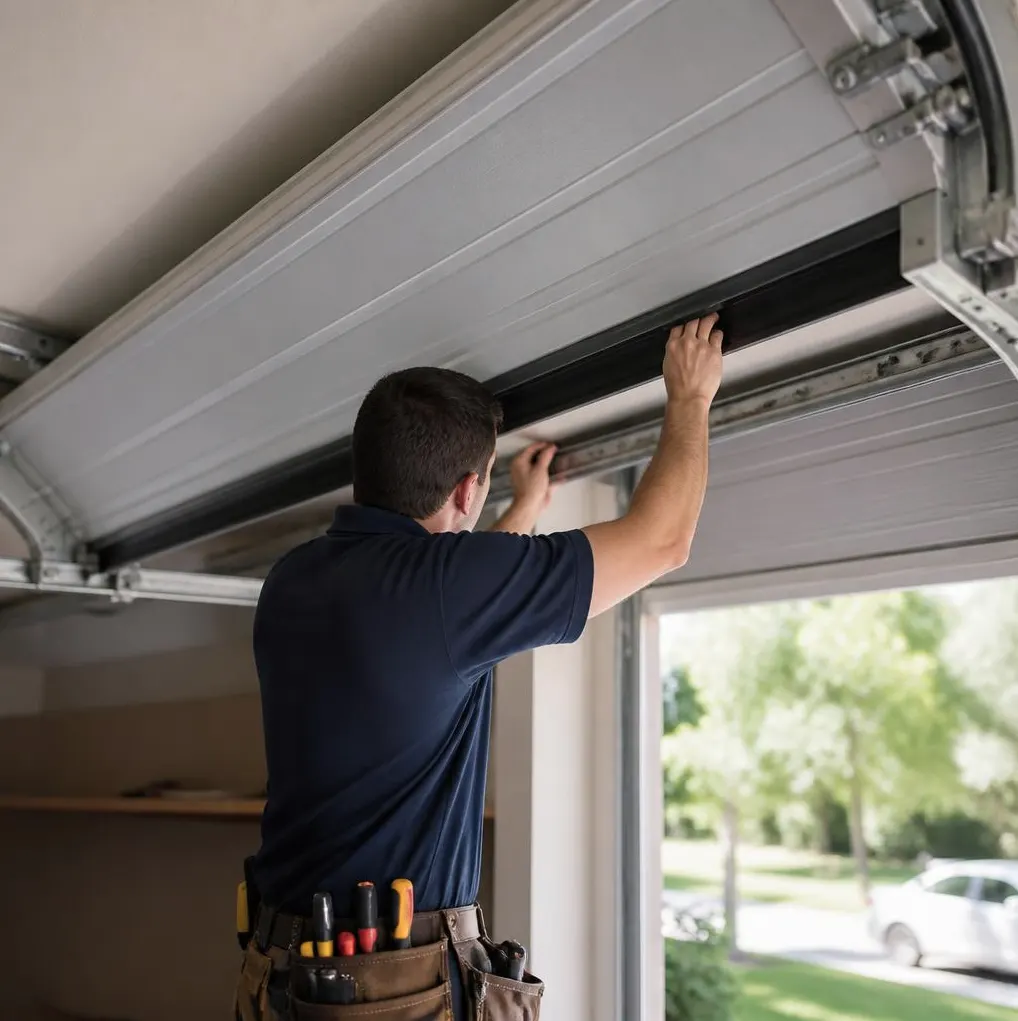
Rule of thumb: if your opener ignores both the remote and the wall button, the problem is almost always power or the opener itself, not the remote. A remote with a dead battery might be slow or require you to hold it closer, but it won't knock out the wall button too. The two main exceptions are a motor that hums or strains without moving the door (that's a mechanical or capacitor issue, not a listening problem) and a unit that responds to the wall button but not the remote, which points to the remote or its antenna rather than the opener itself.
What You'll Notice
Before getting into causes, here's what "ignoring" usually looks like:
- No light, no click, no motor sound at all when you press either control
- A faint click from the opener but the motor never engages
- The opener's working light stays off entirely, even when you flip the wall switch
- One control works fine, but the other does nothing
Each of these points you toward a different stage of the system, which is why checking things in order matters more than guessing.
1. Power to the Unit
This is the first thing any technician checks, because it's the most common and the easiest to fix. Garage circuits in this area often share a GFCI outlet, and humidity from summer storms or condensation on cooler mornings can trip it without any obvious sign of a problem. Check that the opener is plugged in firmly, reset the GFCI outlet if there is one, and check the breaker panel. If the opener's light comes on but nothing else happens, power isn't the issue and you move to the next step.
2. Wall Button and Its Wiring
If the opener has power but still won't respond to the wall button, the next stop is the low-voltage wiring that runs from the button to the unit. This wire is thin, often stapled along a wall or ceiling, and it's an easy target for moisture intrusion, pests, or a staple driven too deep. In garages near pine trees, it's not unusual for rodents or insects to chew into it over time. A technician checks for a loose connection at both ends, then tests continuity on the wire itself. The fix is either reseating the wires or replacing the run of wire entirely, which is inexpensive and quick.
3. Safety Sensors
Modern openers have a photo-eye safety sensor pair near the bottom of the tracks, and if those sensors are misaligned, dirty, or blocked, many openers will refuse to respond to any command — remote or wall button — as a safety measure. This is one of the most overlooked causes because homeowners assume a blinking light means the sensors are fine. Humidity and condensation can fog the lenses, and dust or spiderwebs collect quickly in a garage. Checking this means wiping both lenses clean, making sure nothing (a stored bike, a leaning rake) is in the beam's path, and confirming the small indicator lights on each sensor are solid rather than blinking.
4. The Remote Itself
If the wall button works but the remote doesn't, this is where to look. Start with the battery, but also check whether the remote needs reprogramming, since power surges from storms can sometimes clear an opener's memory. If multiple remotes have stopped working at once, suspect the antenna wire hanging from the opener unit, which can get bent, disconnected, or damaged.
5. The Circuit Board
When power, wiring, and sensors all check out but the opener still won't respond to anything, the logic board inside the unit is the likely culprit. Power surges from inland storm remnants or ice-related outages can damage these boards even when nothing else in the house seems affected. A damaged board usually needs replacing rather than repairing, and on an older opener this is often the point where replacing the whole unit makes more financial sense than fixing one part.
6. Motor or Capacitor
Last on the list, because it's the least likely to present as "total silence." If you hear a hum or a single click but no movement, the motor's capacitor may be failing. This is a repair job, not a DIY fix, since it involves opening the unit housing.
When to Call Aiken Garage Door
If you've checked the outlet and the wall button wiring and the opener still won't respond, it's time to call in a technician rather than keep swapping parts. Aiken Garage Door handles both Garage Door Opener Service and full Emergency Garage Door Service for households that need the door working the same day. We'll test the sensors, wiring, and board in the same order outlined here, and tell you plainly whether you're looking at a quick repair or a unit that's reached the end of its life.
If your opener in Aiken, SC has gone silent, give Aiken Garage Door a call — we'll get it listening again.