
The Quick Answer
A standard garage door can buckle or blow in before any other part of your house shows damage, because it's the largest moving panel in the wall and it isn't built to resist wind the way the studs around it are. Walking the door, checking the hardware, and reinforcing the weak points now — before the next tropical remnant or fall front pushes through — is cheaper and faster than dealing with a caved-in door during a storm.
Why the Garage Door Is a Home's Weakest Wall
Every other wall in your house is a solid, braced assembly. The garage door is a large panel held in place by tracks, rollers, hinges, and a spring system, with the whole thing only as strong as its weakest connection point. When wind pushes against the house, pressure doesn't just push — it also builds up inside the garage if the door flexes or fails, and that internal pressure can push up on the roof from underneath. That's the mechanism that turns a garage door failure into roof and structural damage elsewhere in the house.
Older doors, doors with thin steel skins, and doors that have been slowly losing track alignment over the years are the most vulnerable. A door that looks fine on a calm day can still be marginal once sustained gusts and pressure swings hit it.
What Fall Storms in This Part of South Carolina Actually Do to a Door
This area doesn't usually take a direct hurricane hit, but it regularly gets the inland remnants — heavy, sideways rain followed by gusty bands of wind as a system weakens and moves through. Those gusts are often more erratic than a steady coastal wind, which is harder on hardware because the door is repeatedly flexing and relaxing instead of loading evenly. Add in the humidity and moisture that sit around garages here most of the year, and you get a second problem: rust and corrosion on tracks, hinges, and spring coils that quietly weaken the same hardware the wind is testing.
Pine debris is its own hazard. Falling limbs and wind-driven branches can dent panels or jam tracks, and a door that's already struggling to roll smoothly has less margin left for wind loads on top of that.
Walk Your Door Before the Next Storm Watch
Do this on a calm day, not while a storm is already bearing down:
- Check the tracks for rust, dents, or gaps where they attach to the wall. Loose lag bolts at the track brackets are one of the most common failure points.
- Inspect rollers and hinges for cracking, excessive play, or grinding noise when the door moves. Worn rollers let the door wobble under pressure instead of moving smoothly in the track.
- Look at the springs. Rust pitting, gaps between coils, or a spring that looks stretched compared to its mate are signs it's near the end of its life — and a failed spring during a storm leaves the door with no counterbalance at all.
- Test the auto-reverse safety feature and make sure the door reverses cleanly when it meets resistance; a door that doesn't reverse properly is also one that isn't sealing and locking the way it should.
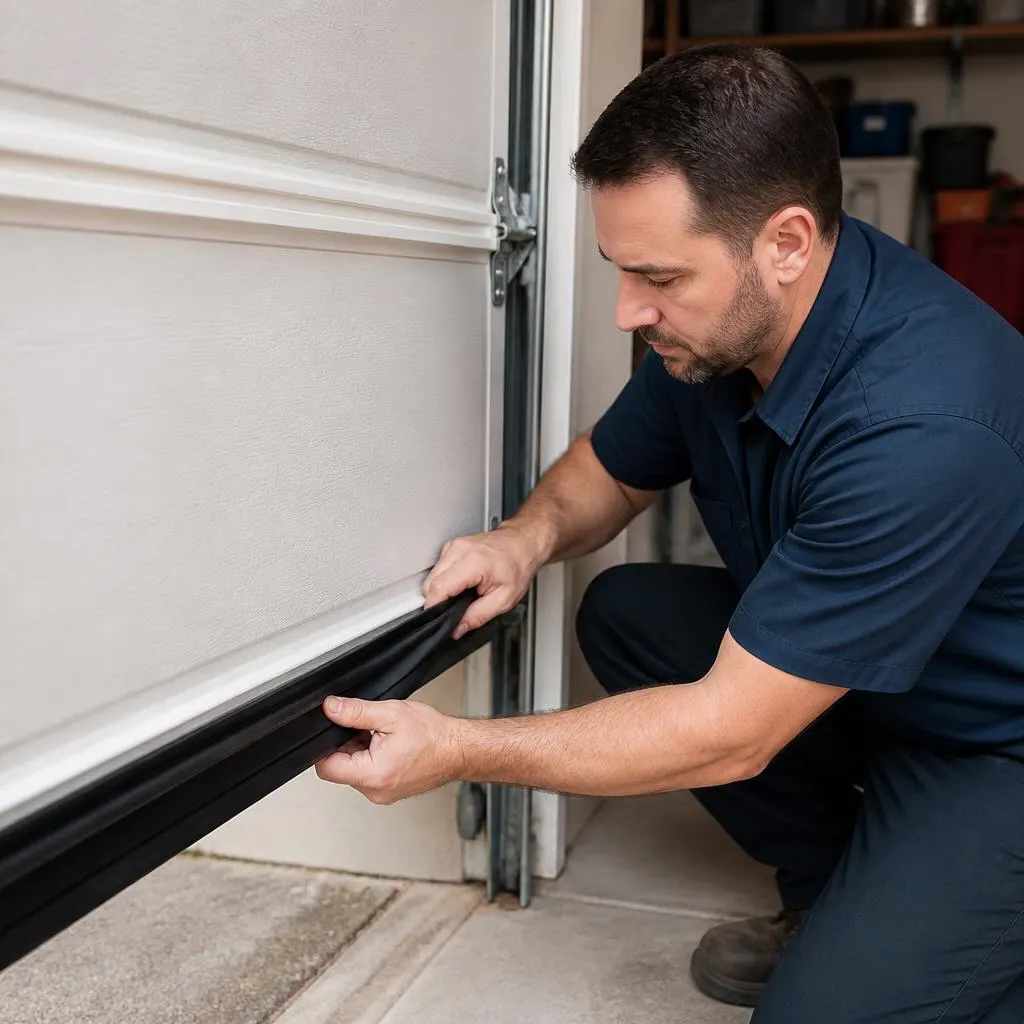
- Check weatherstripping along the bottom and sides. Cracked or missing seals let wind-driven rain into the garage even before the door itself is under stress.
Brace the Panels
If your door doesn't have horizontal bracing on the back of each panel, this is one of the more affordable upgrades available. Retrofit bracing kits stiffen the panel so it resists bowing under wind pressure instead of flexing at the center, generally running in the low hundreds of dollars installed as a national range rather than requiring a full door replacement.
Reinforcement Options and Trade-offs
There's a real range of options depending on how much you want to spend and how old the current door is:
- Bracing kits are the cheapest fix and work well on doors that are otherwise in good shape — they don't help a door with worn tracks or dying springs.
- Upgraded rollers and heavier-gauge tracks address the hardware side without replacing the door panel itself, and they also cut down on the day-to-day wear that humidity and moisture accelerate.
- Full replacement with a wind-rated or impact-rated door is the most thorough option. These doors use reinforced struts and heavier end hardware engineered to handle higher wind pressures, and they make sense if your current door is older, thin-paneled, or already showing fatigue.
The trade-off is straightforward: bracing and hardware upgrades buy meaningful protection for a fraction of the cost of replacement, but they can't fully compensate for a door that's structurally outdated.
Don't Forget the Opener and Power
Fall storms here often bring power outages along with the wind. An opener with battery backup keeps the door operable — and more importantly, keeps it closing and locking properly — even if the power goes out mid-storm. If your opener is more than a decade old, it's worth checking whether it has backup power at all.
When to Call Aiken Garage Door
If you're hearing grinding at the rollers, seeing visible rust or gaps at the spring coils, or noticing the door doesn't sit flush and seal at the bottom, don't wait for a storm watch to find out how it holds up. Aiken Garage Door can run a full inspection as part of a Preventive Maintenance visit, catching worn hardware before it becomes a storm-day failure, and handle Spring Replacement on the spot if a spring is past its service life. If a door fails during an actual storm, their emergency service gets a technician out to secure or repair it rather than leaving your garage — and the rest of your house — exposed.
Get your garage door checked before the next front moves through. Call Aiken Garage Door today — serving Aiken, North Augusta, Graniteville, Warrenville, New Ellenton, Beech Island, Jackson, and Wagener.